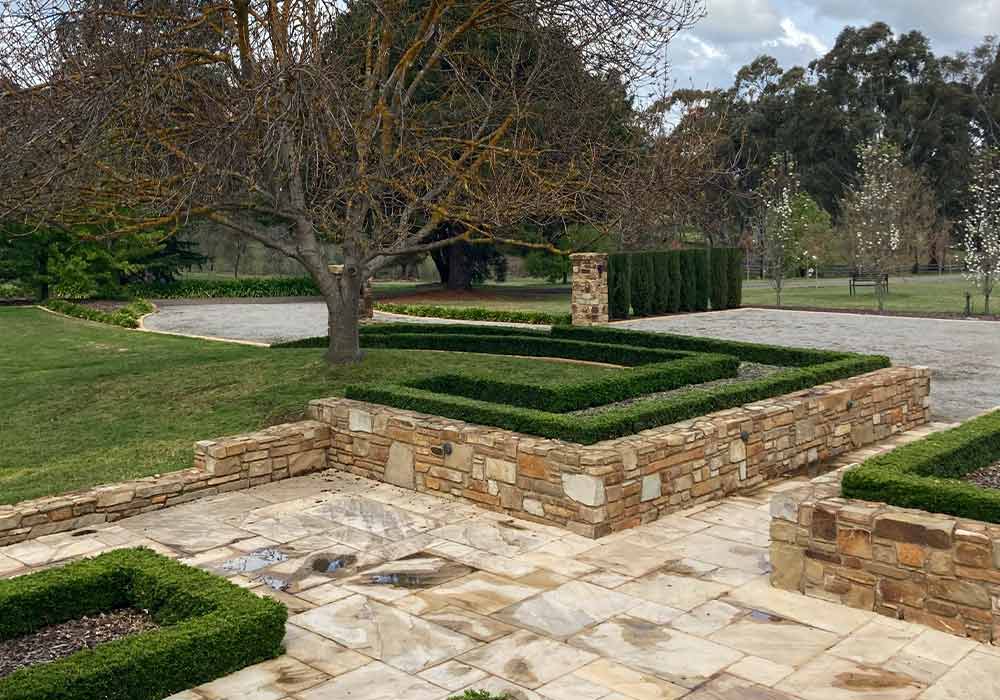
Professional landscape and design on the Mornington Peninsula should create more than an attractive garden. At Luke Bullock Landscape Construction, we approach landscape design as a way to connect the home, garden and the people who use them. The position of entertaining areas, pathways, planting, views, privacy and materials all contribute to how naturally you move between indoor and outdoor spaces and how cohesive the property feels as a whole.
This relationship is particularly important on the Mornington Peninsula, where homes range from established residences and family properties to contemporary coastal homes and rural retreats. The landscape should respond to the architecture and setting rather than feel like a separate addition once the house is complete. Our aim is to create an outdoor environment that feels considered from the moment you approach the property through to the spaces where you relax, entertain and spend time outdoors.
Good landscape design starts with the relationship to the home
One of the first considerations in landscape design is how the house sits within the property. Doors, windows, living areas and important views all create opportunities to establish stronger connections with the garden. Rather than treating the building and landscape as two separate projects, a considered landscape garden design looks at how they can complement each other.
This might mean aligning a path with an entrance, positioning an outdoor entertaining area so it extends naturally from the main living space, or using planting to soften the transition between built structures and the garden. Views from inside are important too. Windows can frame feature trees, layered planting or other focal points so that the garden remains part of the experience of the home even when you are indoors.
Indoor-outdoor transitions should feel natural
The transition from inside to outside can have a significant influence on how successfully an outdoor space functions. We look at the position of internal living areas, door openings, floor levels, orientation and circulation before determining where terraces, paved areas, paths and planting should sit. A strong connection is created when these elements respond to the architecture and make moving between the house and garden feel intuitive.
Orientation is a practical design consideration, not simply a matter of deciding where an outdoor area will fit. Sun angles change throughout the year, while prevailing winds, existing vegetation and the position of the home can create areas that are naturally warmer, cooler, more exposed or more sheltered. We use these conditions to inform where people will spend time, where shade may be needed and how planting can contribute to shelter and seasonal comfort. These principles are consistent with Australian Government YourHome guidance on orientation, which considers solar access, prevailing breezes, vegetation and outdoor living areas as interconnected parts of passive design.
The design also needs to translate successfully into construction. Levels, paving, retaining, steps and other hard landscape elements need to resolve the physical transition between the building and garden, while planting softens those structures and helps settle the home into its landscape. Considering landscape construction and planting from the design stage means these elements can work together rather than being resolved independently later.
Outdoor entertaining areas need to work as part of the plan
A successful entertaining area needs more than enough room for a table and chairs. Its position in relation to the kitchen or living areas, exposure to sun and weather, privacy and connection to the rest of the garden all influence how comfortable and practical it will be.
When developing a backyard design, we consider how people will move between the home and outdoor areas, as well as how those spaces will function when several people are using them at once. An entertaining zone might need a clear connection to lawn or garden areas so children can move between spaces, while another property may benefit from a more intimate outdoor area enclosed by planting.
Orientation can also affect how enjoyable these areas are throughout the seasons. Planting and built landscape elements can be positioned to provide shade, filter winds, create enclosure and establish privacy without unnecessarily closing the garden in. The objective is to make the entertaining area feel integrated into the broader landscape rather than like a paved space added beside the house.
Pathways connect more than two points
Paths are sometimes treated as purely functional features, but their role in a professionally designed landscape is much broader. Their width, direction, material and relationship with surrounding planting influence how people move through the property, what they see along the way and how different outdoor spaces are experienced.
In garden design, circulation should be deliberate. Frequently used routes generally need to be direct and comfortable, while secondary paths can create a slower experience through planting or lead towards quieter areas of the garden. Changes in levels, paving transitions and the placement of steps also need to be resolved as part of the landscape construction so movement remains logical across the site.
This is particularly relevant to front yard landscaping. The journey from the street or driveway to the front door creates the first experience of the property. Planting, paving, levels and sightlines can work together to establish a clear sense of arrival while balancing access, presentation and privacy.
Views and privacy need to be considered together
Many Mornington Peninsula properties have outlooks worth preserving, whether towards the coast, surrounding vegetation or the garden itself. Landscape design can frame those views while managing less desirable outlooks towards neighbouring properties, roads, service areas or other structures.
Privacy does not always require creating a solid visual barrier. We can use the position, mature height and density of planting to control sightlines at the points where screening is actually needed. Layering trees, shrubs and lower planting can provide separation while retaining light, outlook and a sense of space. This is generally a more considered response than surrounding an entire outdoor area with dense screening.
This balance can be particularly important in coastal areas. Mornington Peninsula Shire planning controls can influence how development and landscaping respond to sensitive coastal settings, vegetation and landscape character.
Materials can create continuity between architecture and garden
Material selection is another way to strengthen the relationship between the house and garden. Paving, stone, timber, gravel and other finishes can reference colours, textures or forms already present in the architecture without simply copying them.
For example, a contemporary home with a restrained material palette may suit similarly clean landscape materials, softened by planting. A property with more natural or textural finishes may call for stone, timber or other materials that reinforce that character. On the Mornington Peninsula, material selection should also respond to the setting, exposure and architectural character of the individual property.
Material choices also have construction implications. The intended use of a surface, changes in level, drainage, exposure and long-term maintenance all need to be considered before a material is specified. By approaching landscape design and construction together, we can select finishes that support the design intent while also being appropriate for how the space will actually perform.
Planting connects the built landscape with its setting
Planting is one of the most effective ways to integrate a home into its landscape, but it needs to do more than fill garden beds. We use planting to establish scale, frame views, soften hard landscape elements, create privacy and define the transition between different outdoor zones.
Plant selection also needs to respond to the conditions of the property. Mornington Peninsula gardens can vary considerably in exposure, soil, aspect and available moisture, so the planting palette should be developed for the individual site. Mature size matters as much as appearance. Trees and shrubs need sufficient space to develop without overwhelming paths, entertaining areas or the architecture as the garden establishes.
Irrigation should be considered alongside the planting design rather than added as an afterthought. Establishing how different planted areas will be watered allows the irrigation approach to respond to plant requirements and the layout of the garden. This helps support successful establishment while avoiding a disconnect between the design on paper and the practical requirements of maintaining the finished landscape.
Different outdoor zones should still feel like one landscape
Larger properties often need to accommodate several functions. There may be an entertaining area, lawn, garden beds, a quiet seating space, a front entrance and transitional spaces between them. Good backyard landscape design gives each zone a purpose while ensuring they still belong to the same overall landscape.
Repetition can help establish that connection. Consistent planting, recurring materials, complementary forms and clear pathways can visually link spaces even when they serve very different purposes. The result should feel cohesive without becoming repetitive.
At Luke Bullock Landscape Construction, our landscape design, construction, planting and irrigation work allows these decisions to be considered as parts of the same landscape. That continuity is valuable because a successful design ultimately needs to be buildable, appropriately planted and capable of developing into the landscape originally intended.
Create a landscape that feels connected to your home
The most successful landscapes do not feel separate from the architecture or the way people live. They connect indoor and outdoor areas, provide intuitive movement through the property and balance entertaining, privacy, views, planting and practical requirements within one considered design.
Professional garden design services can bring these elements together from the beginning, whether you are building a new home, renovating an established property or rethinking an outdoor area that no longer works for your lifestyle. If you are planning a project on the Mornington Peninsula, contact Luke Bullock Landscape Construction to discuss how professional landscape design and construction can create a stronger connection between your home and outdoor spaces.