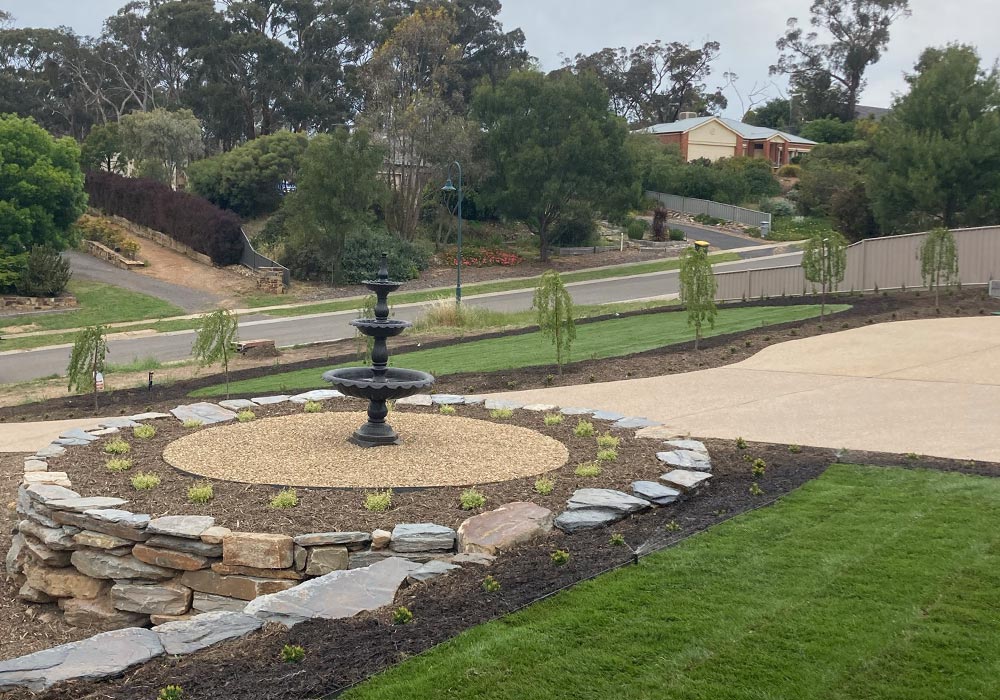
Professional garden design services on the Mornington Peninsula start with understanding the property, the people who live there and the environment in which the garden needs to perform. At Luke Bullock Landscape Construction, we consider how architecture, lifestyle, soil, drainage, levels, exposure, planting and ongoing maintenance can work together to create a garden that looks considered and functions well over time.
The Mornington Peninsula is not one uniform landscape. Coastal properties, established suburban gardens and larger inland or rural properties can present very different conditions. That makes site-specific landscape design particularly important.
Garden design on the Mornington Peninsula starts with the site
Before developing a garden design, we look closely at the existing property.
Orientation influences where sunlight and shade fall throughout the day and across the seasons. Existing levels can determine how people move through the garden and whether retaining or changes in elevation need to become part of the landscape and design. Views may need to be framed, while privacy, neighbouring properties and prevailing weather can influence the position of planting and outdoor spaces.
Drainage is another important consideration. Water needs to move through and away from buildings, garden beds, lawns and hard surfaces appropriately. Addressing levels and drainage during the design process helps create a landscape that works as a complete system rather than a collection of separate features.
This initial assessment gives us the information needed to make informed design decisions before construction begins.
The architecture should inform the landscape design
A successful landscape should feel connected to the home.
When planning a landscape garden design, we consider the building’s architecture, proportions, materials, colours and important sightlines. A contemporary coastal home may call for a different response from an established residence, rural property or traditional Peninsula home.
The aim is not necessarily to replicate the architecture in the garden. Instead, we look for ways to create a relationship between the two. That may influence the geometry of the backyard design, the scale and position of planting, the selection of materials and the transition between indoor and outdoor areas.
The front of the property matters too. Thoughtful front yard landscaping can establish a strong connection between the home, garden and streetscape while providing a practical approach to entrances, paths, driveways and privacy.
How will you actually use your garden?
One of the most important questions we ask has little to do with plants: how do you want to use the space?
A family with young children will have different requirements from a couple wanting a quiet garden retreat. Some homeowners prioritise outdoor entertaining, while others want open lawn, privacy, areas for pets or spaces that can accommodate larger gatherings.
Good backyard landscape design responds to those priorities. It also considers movement. The routes between the house, driveway, entertaining areas and different parts of the garden should feel logical and comfortable. The result should be an outdoor environment that supports everyday life rather than simply looking good from one viewpoint.
Soil, drainage and levels influence what is possible
What happens below ground is just as important as what you see above it.
Soil characteristics influence plant selection, establishment and long-term performance. Conditions also vary across the Mornington Peninsula. Mornington Peninsula Shire documents more than 60 Ecological Vegetation Classes across the region, while local guidance for parts of the southern Peninsula identifies distinctive coastal soil conditions, including calcareous sands.
For us, the practical point is simple: garden landscape design should respond to the conditions of the individual property. Soil, drainage, levels and exposure need to be understood rather than assumed.
Plant selection needs to suit the location
Plants provide structure, texture, seasonal interest and character, but choosing them is about more than appearance. We consider factors including available space, sunlight, shade, soil conditions, exposure, water requirements, mature plant size and the overall design intent.
Coastal exposure can be particularly influential on some Peninsula properties. A plant that performs well in a protected inland garden may not be the right choice for an exposed site affected by salt-laden winds.
Local indigenous plants can also play an important role where appropriate. Mornington Peninsula Shire reports that the Peninsula supports nearly 700 indigenous plant species and recommends choosing local plants suited to the specific area. This can support local habitat, reinforce the character of the landscape and contribute to a lower-maintenance garden.
The objective is not to apply one planting formula everywhere. It is to develop a planting palette that makes sense for the property and the desired landscape.
Water and long-term maintenance belong in the design
A garden is not finished on installation day. It needs to establish, grow and evolve.
That is why we consider irrigation and ongoing maintenance as part of the design process. Victoria’s permanent water-saving rules encourage efficient garden watering, and Victorian Government guidance identifies efficient irrigation methods, including drip irrigation, as a way to deliver water more directly to plant root zones while reducing unnecessary water loss.
Plant spacing and mature size are equally important. Understanding how plants are likely to develop helps prevent a garden from becoming overcrowded and ensures the original design has room to mature.
Maintenance expectations should also be discussed early. A homeowner wanting a highly detailed garden may be comfortable with regular care, while someone with limited time may prefer a simpler landscape with different planting and material choices.
Neither approach is inherently better. The important thing is designing the garden around realistic expectations.
Professional garden design brings the whole property together
Good garden design is ultimately about relationships: the relationship between the house and landscape, between plants and their growing conditions, and between outdoor spaces and the people using them.
At Luke Bullock Landscape Construction, our approach to landscape design on the Mornington Peninsula is tailored to the individual property. We consider the site, architecture, lifestyle, local conditions and long-term performance before bringing those elements together into a cohesive outdoor environment.
If you are planning a new garden, renovating an established landscape or considering how to make better use of your outdoor areas, contact Luke Bullock Landscape Construction to discuss professional garden design services on the Mornington Peninsula.